
A saree is more than just a beautiful piece of clothing. The types of saree fabric plays an important role in its appearance, comfort, drape, and overall style. we have can identify different With so many varieties available today, it can sometimes be difficult to understand whether a saree is made from silk, cotton, chiffon, georgette, organza, linen, or another fabric.
Knowing how to identify different types of saree fabrics can help you make better choices when shopping for sarees. It can also help you understand how a saree will look and feel before buying it.
In this guide, we will explore the most popular saree fabrics and explain how you can identify them through their texture, weight, shine, weave, and drape. you can visit our shop and have the chance to know more about AADISAREEWALA
Why Is It Important to Identify Saree Fabric?
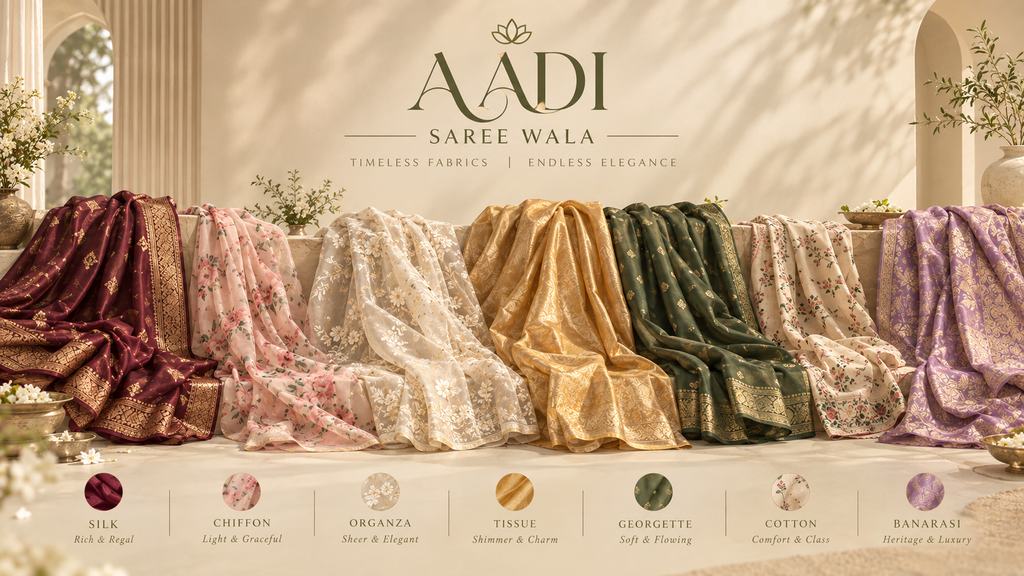
we have to know types of saree fabric looks and feels. when we go to any store we should know which fabric we are buying and looking for. The fabric of a saree affects almost everything about it, from how comfortable it feels to how it falls on the body. A lightweight chiffon saree, for example, behaves very differently from a traditional silk saree. when you visit our show we help you to identify the types of saree fabric and help you to choose as per you need.
Understanding the fabric can help you choose the right saree for different occasions.
For example:
- Cotton sarees are excellent for everyday wear and summer.
- Silk sarees are popular for weddings and festive occasions.
- Chiffon and georgette are suitable for elegant party looks.
- Linen sarees offer a sophisticated and comfortable appearance.
- Organza sarees are known for their crisp and luxurious look.
Fabric knowledge can also help you take better care of your saree because different materials require different washing and storage methods.
1. How to Identify Silk Saree Fabric
Silk is one of the most popular saree fabrics in India. It is traditionally made from natural silk fibric and is known for its luxurious texture and beautiful sheen. It have a very shiny texter and look very elegant and royal in every drape. it is the most beautiful type of saree fabric . It have that shine and elegance in it
How to recognize silk
A genuine silk saree usually has a soft and smooth texture. It often has a natural shine that changes slightly when viewed from different angles. Silk is generally heavier than many synthetic fabrics and has an elegant fall.
Another way to identify silk is by looking closely at the weave. Traditional silk sarees often have detailed woven designs, zari work, or elaborate borders.
However, not every shiny saree is necessarily silk. Synthetic fabrics can also have a strong shine, so checking the texture, weave, and fabric label is important. this type of saree are mostly worn at any function any kind of occasion etc .
Best occasions for silk sarees
Silk sarees are particularly popular for:
- Weddings
- Festivals
- Religious ceremonies
- Traditional celebrations
- Formal events
2. How to Identify Cotton Saree Fabric
Cotton is one of the most comfortable saree fabrics, especially in warm weather.t It is made from natural cotton fibres and is known for its breathable and lightweight nature.
How to recognize cotton
Cotton usually has a soft or slightly textured feel rather than a glossy surface. It absorbs moisture well and generally feels comfortable against the skin.
Cotton sarees may have a matte appearance, although some varieties can have a slightly polished finish.
When you hold a cotton saree, it usually feels lighter and more breathable than many silk fabrics.
Best occasions for cotton sarees
Cotton sarees are suitable for:
- Everyday wear
- Office wear
- Summer outings
- Casual gatherings
- Traditional daytime events
Popular varieties include handloom cotton, Bengal cotton, Chanderi cotton, and other regional cotton sarees.
3. How to Identify Chiffon Saree Fabric
Chiffon is a lightweight and delicate fabric that is commonly used for elegant sarees. It has a soft and flowing appearance and is often slightly transparent.
How to recognize chiffon
Chiffon is extremely lightweight and has a smooth, slightly slippery texture. When you hold it, the fabric tends to flow easily instead of maintaining a stiff shape.
It is usually more transparent than cotton or silk and creates a graceful drape.
Because of its lightweight nature, chiffon sarees are often comfortable for parties and special occasions.
Best occasions for chiffon sarees
Chiffon works well for:
- Evening parties
- Weddings
- Date nights
- Formal events
- Festive celebrations
4. How to Identify Georgette Saree Fabric
Georgette is another popular lightweight saree fabric. Although it can look similar to chiffon, there are noticeable differences.
How to recognize georgette
Georgette generally has a slightly grainy or textured surface. It is lightweight but usually has more structure than chiffon.
The fabric drapes beautifully and tends to create soft pleats. It is often available in vibrant colours and is commonly decorated with embroidery, prints, sequins, or embellishments.
When compared with chiffon, georgette generally feels slightly more textured and less slippery.
Best occasions for georgette sarees
Georgette sarees are suitable for:
- Parties
- Weddings
- Festive occasions
- Evening functions
- Contemporary ethnic looks
5. How to Identify Organza Saree Fabric
Organza has become increasingly popular because of its elegant and sophisticated appearance. It is known for its crisp texture and slightly transparent finish.
How to recognize organza
The easiest way to recognize organza is by its crispness. Unlike chiffon and georgette, organza tends to hold its shape instead of falling closely against the body.
It has a slightly stiff texture and often creates structured pleats. The fabric can have a subtle shine and a delicate, airy appearance.
Organza sarees are frequently decorated with floral embroidery, zari borders, prints, or delicate threadwork.
Best occasions for organza sarees
Organza is ideal for:
- Weddings
- Receptions
- Festive occasions
- Daytime parties
- Fashion events
6. How to Identify Linen Saree Fabric
Linen sarees have become popular among people who prefer a combination of comfort and sophistication.
Linen is made from flax fibres and has a distinctive natural texture.
How to recognize linen
Linen generally has a slightly crisp and textured surface. It does not have the smooth, glossy appearance commonly associated with silk.
One of its most recognizable features is its natural, slightly uneven texture. Linen also tends to become softer with use.
Pure linen sarees may wrinkle relatively easily, which is a natural characteristic of the fabric.
Best occasions for linen sarees
Linen sarees are great for:
- Office wear
- Casual occasions
- Daytime events
- Summer outings
- Minimal and elegant looks
7. How to Identify Velvet Saree Fabric
Velvet is less common than lightweight saree fabrics but is often used for luxurious winter and evening sarees.
How to recognize velvet
Velvet has a soft, dense surface with a distinctive pile. When you move your hand across the fabric, you can feel its plush texture.
It is usually heavier and warmer than fabrics such as chiffon or georgette.
Velvet sarees often feature rich colours and elaborate embroidery, making them suitable for glamorous occasions.
Best occasions for velvet sarees
Velvet sarees can be worn at:
- Winter weddings
- Evening receptions
- Formal celebrations
- Luxury events
8. How to Identify Crepe Saree Fabric
Crepe is known for its slightly textured surface and fluid drape. It is commonly used for modern sarees and printed designs.
How to recognize crepe
Crepe usually has a subtle grainy texture. It falls smoothly around the body and does not have the crispness of organza.
Depending on whether it is made from natural or synthetic fibres, crepe can have different levels of softness, weight, and shine.
Crepe sarees are often chosen for their comfortable drape and modern appearance.
9. How to Identify Tissue Saree Fabric
Tissue fabric is known for its luminous and metallic-looking appearance. It is often associated with festive and bridal fashion.
How to recognize tissue
Tissue sarees usually have a noticeable shine created by the way metallic or shiny yarns are woven into the fabric.
They tend to look more reflective than ordinary silk or cotton sarees.
Tissue sarees are especially popular for celebrations where a glamorous appearance is desired.
Best occasions for tissue sarees
They are suitable for:
- Weddings
- Festivals
- Receptions
- Bridal functions
- Grand celebrations
10. How to Identify Banarasi Saree Fabric
Banarasi sarees are famous for their intricate weaving and luxurious appearance. They are traditionally associated with Varanasi and are especially popular for weddings and festive occasions.
How to recognize a Banarasi saree
Look closely at the woven motifs and borders. Traditional Banarasi sarees often feature detailed patterns created through weaving rather than simply printed designs.
Common motifs include floral patterns, leaves, paisleys, and traditional decorative elements.
Many Banarasi sarees also feature zari work that gives them a rich golden or silver appearance.
11. How to Identify Chanderi Saree Fabric
Chanderi sarees are known for their lightweight texture, subtle transparency, and elegant appearance.
How to recognize Chanderi
Chanderi fabric is generally lightweight and has a delicate, slightly sheer appearance. It often has a subtle shine and may feature traditional motifs woven into the fabric.
Because of its lightness and elegant fall, Chanderi is particularly popular for daytime and festive occasions.
How to Check Saree Fabric Before Buying
When shopping for a saree, you can use a few simple methods to understand the fabric.
1. Check the texture
Run your fingers gently over the fabric. Does it feel smooth, crisp, soft, grainy, or slightly rough?
Texture can give you an initial idea of the fabric type.
2. Check the weight
Hold the saree in your hands. Lightweight fabrics such as chiffon and georgette feel very different from heavier silk or velvet.
3. Observe the shine
Natural silk usually has a softer, more natural-looking sheen. Synthetic materials can sometimes have a stronger or more uniform shine.
4. Look at the drape
Allow a small section of the saree to fall naturally. Fabrics such as chiffon and georgette tend to flow, while organza holds more structure.
5. Examine the weave
Look closely at the fabric under good lighting. Woven patterns, zari, and the structure of the threads can provide useful clues about the saree.
6. Always check the fabric label
If you are buying a saree online or from a store, check the product description or fabric label. This is one of the safest ways to confirm the material.
Natural vs Synthetic Saree Fabrics
One important thing to understand when buying a saree is the difference between natural and synthetic fibres.
Natural fabrics include materials such as:
- Cotton
- Silk
- Linen
Synthetic fabrics may include:
- Polyester
- Nylon
- Synthetic chiffon
- Synthetic georgette
Synthetic sarees can be affordable, durable, and easy to maintain. Natural fabrics, on the other hand, are often appreciated for their breathability, texture, and traditional appeal.
Neither category is automatically better. The best choice depends on your budget, comfort, occasion, and personal preference.
Which Saree Fabric Should You Choose?
The right saree fabric depends largely on where you plan to wear it.
For summer, cotton and linen are excellent choices because they are comfortable and breathable.
For weddings, silk, Banarasi, Chanderi, and rich tissue sarees can create a traditional and luxurious appearance.
For parties, chiffon, georgette, and crepe can provide a graceful and contemporary look.
For formal or office wear, linen, cotton, and lightweight Chanderi sarees can offer an elegant appearance without being too heavy.
Final Thoughts
Understanding different types of saree fabrics makes saree shopping much easier. Every fabric has its own personality, texture, drape, shine, and comfort level. From the luxurious appearance of silk to the breathable comfort of cotton and the graceful flow of chiffon and georgette, there is a fabric for almost every occasion.
When choosing a saree, do not focus only on its colour or design. Pay attention to the fabric, texture, weight, weave, and drape. Once you learn these simple differences, you will be able to recognize saree fabrics more confidently and select pieces that suit your style and occasion.
Whether you are looking for a traditional wedding saree, a comfortable everyday saree, or an elegant party outfit, understanding the fabric is the first step toward making a better choice.